All Resources
Amazon Rufus: How Visibility Shifts from Keywords to AI Relevance
Blog

Amazon Rufus: How Visibility Shifts from Keywords to AI Relevance

Amazon’s assistant Rufus increasingly decides which products shoppers even see, before classic ranking applies. What that means for content, visibility and measurement on Amazon.

Elisabeth Delfs
Elisabeth Delfs
Jul 08, 202611 min read

Rufus is Amazon’s AI-powered shopping assistant. It answers buying questions directly in the app, compares products, and ends with a short selection of recommended products. In 2025, over 300 million shoppers used it, with interactions up more than 210 percent year on year. For brands on Amazon, that shifts what visibility means: it is no longer your ranking position alone that counts, but whether Rufus actively recommends the product.

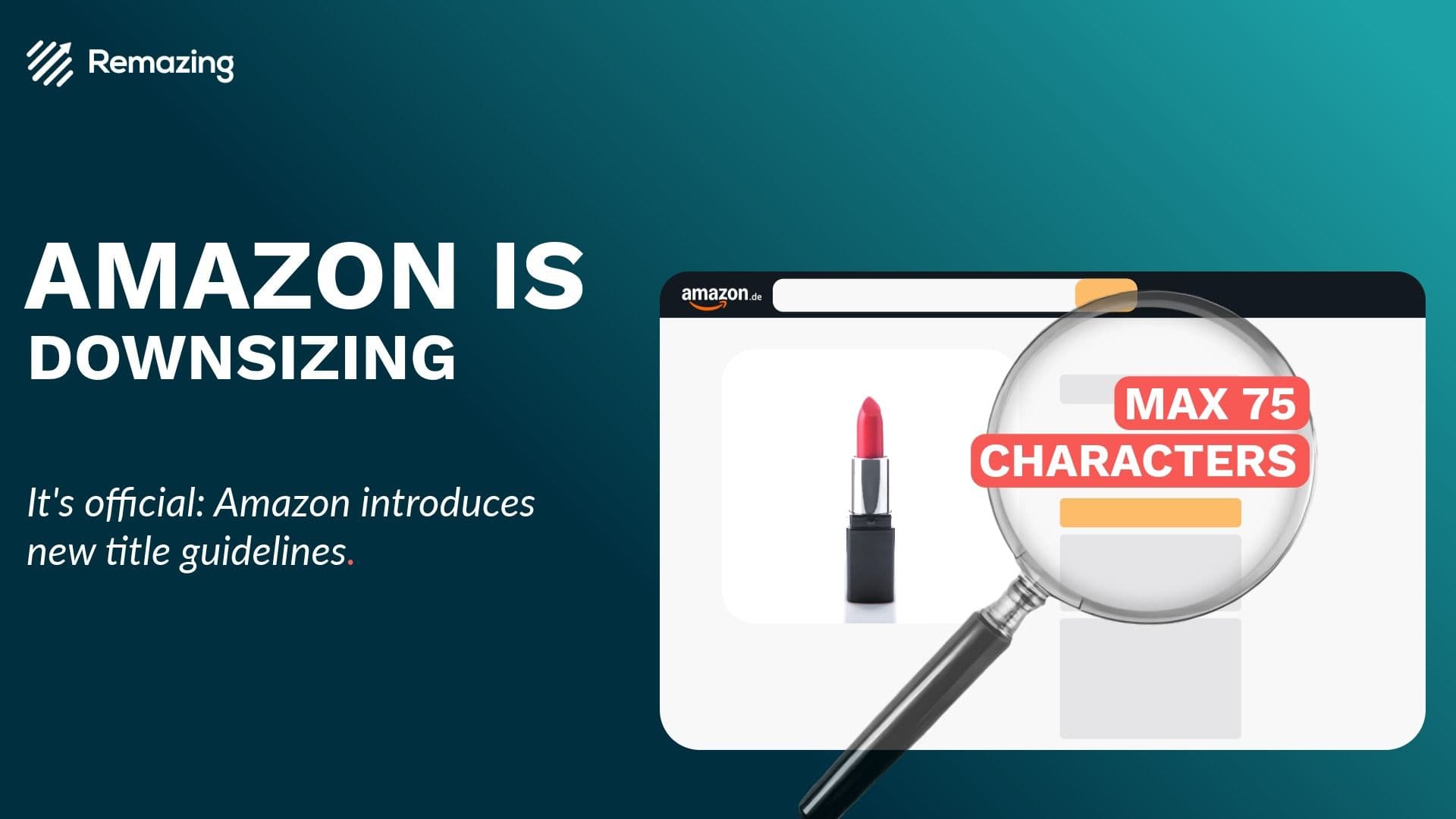
This topic is gaining relevance fast. In the US, Amazon merged Rufus with Alexa+ into Alexa for Shopping in May 2026; in Europe it still runs as Rufus. In parallel, Amazon is introducing a shopper profile called “Tell us about you,” which returns different products for the same query depending on the person, and it is reworking product titles around 75 characters. In this article, we show you exactly how Rufus works, what changes for content and visibility, and which levers you hold yourself.
How Amazon Rufus selects product recommendations

Rufus does not return a long list of hits to a question. On average it names only around five products. A brand that is not among them is effectively invisible to those shoppers. Behind this, three parts work together. First, Rufus decides which products are relevant enough for a query to enter the answer at all, and pulls the matching information from the listing. COSMO, Amazon’s semantic graph of everyday and shopping knowledge, interprets their meaning and matches it to the intent of the query. Only then does A9 rank the remaining products by the familiar performance signals such as sales velocity and Best Seller Rank. Technically, this runs on a RAG architecture: the assistant pulls information from listings, reviews and questions, and a language model shapes the answer from it.

The decisive shift lies in the order: relevance is evaluated before ranking. A product has to be relevant enough to enter the answer first; if it does not clear that, its ranking position is irrelevant. Rufus therefore selects far more strictly than classic search. In our daily work with large brands we see this regularly: not every product that ranks on page 1 makes it into the recommendation. A strong page-1 ranking does not guarantee a Rufus mention.

From keywords to intent

The assistant no longer judges whether a search term like “SPF 50 face cream” appears in the title, but whether a listing answers a full question, such as “which SPF 50 cream suits oily skin and holds up under makeup?” For the writing, that means content has to deliver something worth retrieving, not just keywords that happen to fit.

Amazon’s semantic indexing works with BERT-style models. They capture the semantic similarity between a query and a product, connecting related phrasings even without an exact word overlap. “LED lighting for the living room” and “outdoor light for the garden” end up next to each other as related meanings. That only works, though, when the content is structured and machine-readable. Complete attributes, clearly separated fields, no text hidden in a format that cannot be parsed. A listing that is strong in substance but poorly structured simply goes unused by the assistant.

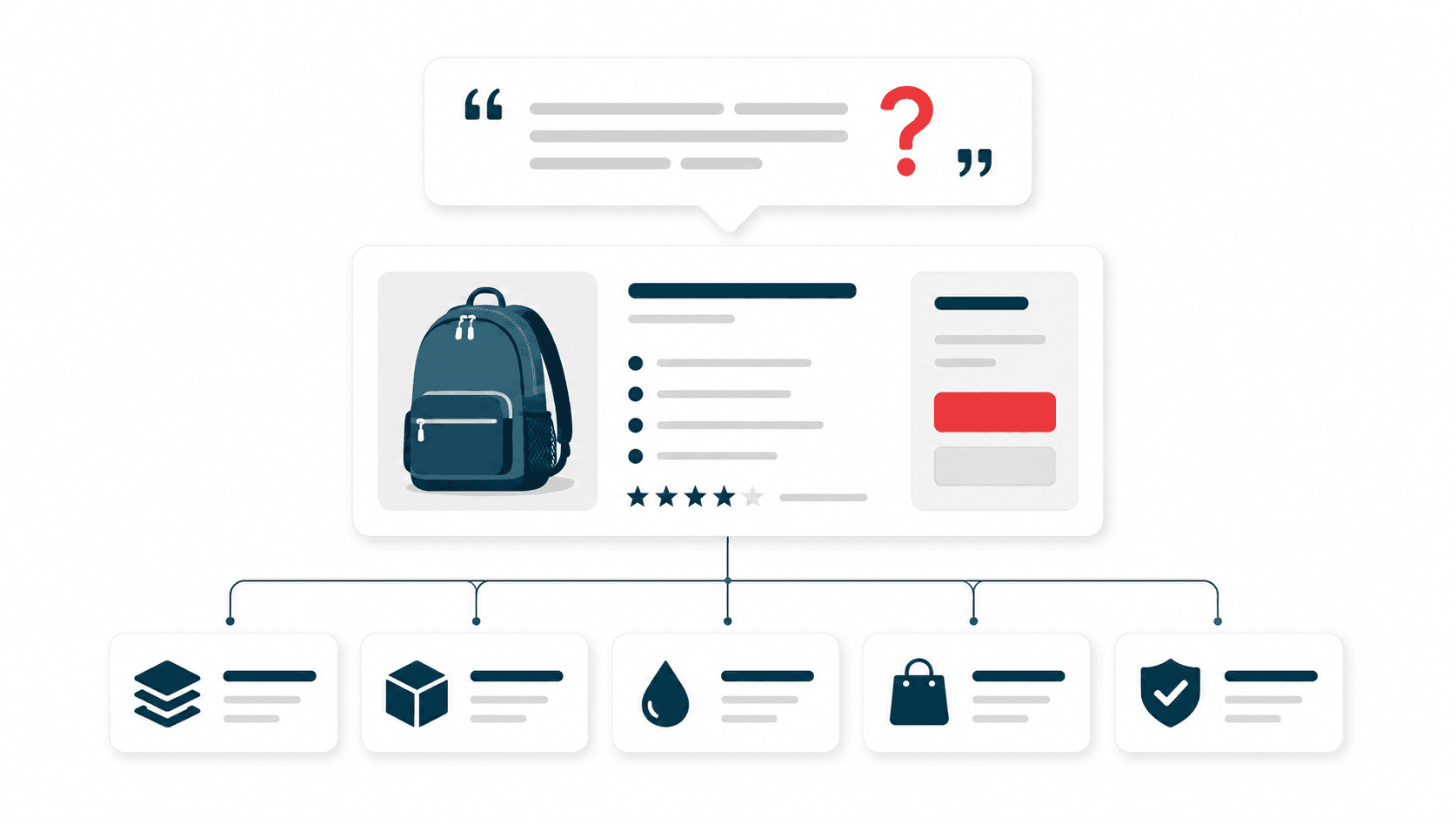
In practice, that means aligning titles and bullets to scenarios and benefits. A title like “Waterproof backpack, fits a 16-inch laptop, for commuting and outdoors” carries a concrete use, and the limited character count forces prioritization, which is why a clean handling of the 75 characters in the title pays off directly here. What matters is pairing every property to its function: “niacinamide for more radiance” is clearer to the assistant than “niacinamide,” and “LED for energy efficiency” is clearer than “LED technology.”

The indexed levers you still control (and quietly lose)

Amazon does not disclose the exact relevance of individual listing elements. Even so, there is a handful of fields whose effect is well documented in practice and that a brand controls directly. Some of them, vendor teams lose without noticing.

The first field is the plain-text backend description. It is still indexed by A9, even when A+ Content covers it for shoppers. This is exactly where the quiet loss sets in: teams that stop maintaining this field after the A+ launch give up rankings without anything lighting up in the reporting. It belongs maintained and updated whenever the keyword strategy shifts.

For images, an AI image recognition takes over the evaluation: it reads product attributes directly from the image. In practice that means optimizing the image itself, with clear motifs, legible attributes, and a benefit hierarchy that shows the most important argument in a few seconds. According to reports, Amazon is increasingly replacing self-written alt text with AI-generated descriptions, supposedly already largely in Europe, though this is not confirmed. Working on the image itself remains important regardless.

A+ Content itself is the less clear case: whether its body copy feeds into A9 is open, and for classic keyword ranking it moves practically nothing. As a conversion engine, A+ stays strong nonetheless; by Amazon’s own figures, Basic lifts conversion by up to 8 percent and Premium by up to 20 percent. On top of that, Q&A modules are a fourth, often overlooked lever: they act like structured data the assistant can read out, and alongside the backend description they are the surface on which a brand still holds the intent-near writing in its own hands after the alt-text shift. Both belong kept alive and aligned with each other.

Reviews, sentiment and external authority

On this new layer, reviews are not a sideshow. They rank among the strong drivers of whether the assistant recommends a product at all. A high rating and a strong Best Seller Rank are the baseline here: on their own they decide nothing, but without them a product barely clears the pre-selection.

The real difference lies deeper, in the substance of the reviews. The assistant summarizes reviews, extracts recurring themes, and carries the sentiment into its recommendation, with detailed, benefit-specific reviews counting for more than a high number of terse stars. That leads to an uncomfortable consequence: what the brand promises in its content, what it asserts in claims, and what the reviews say all have to fit together. Otherwise the assistant reads contradiction instead of confirmation.

On top of that comes authority outside Amazon. The assistant factors external signals into its evaluation, meaning expert verdicts, editorial mentions, user-generated content, certifications. These external authority signals, which at their core feed into E-E-A-T, feed back into visibility on Amazon. Off-Amazon work is therefore not a separate PR pot, but a factor in findability on the platform itself.

How personalization changes the answer to the same question

Amazon is rolling out a profile called “Tell us about you.” In it, shoppers describe their style, hobbies, household and who they buy for, in their own words. These details persist and apply across Rufus, Alexa and the rest of Amazon shopping, not just for the single session. It is free text, not dropdowns.

For a brand, that has a direct consequence. The same query returns different product sets depending on the stored profile. The assistant has to map identity onto product attributes, listing text and ASIN signals, and at scale. Every ASIN therefore needs a clear answer to a single question: who is this product especially meant for, and why should the assistant match it to exactly this person? A listing that does not carry that answer stays hard for the assistant to place, no matter how cleanly it is otherwise written.

The new measurement layer shifts from position to mention

Classic metrics revolve around ranking and traffic, meaning how visible a product is on a results page. On the AI layer, that no longer applies. A product is not just ranked, it is selected, summarized and recommended in a generated answer. Visibility here simply means whether the assistant names your product or not.

A new metric is forming for this, the share of AI recommendations, often called AI Share of Voice. It asks how often a brand appears in the assistant’s answers across the relevant queries. This is not an official Amazon metric, but a forming figure from practice, and it differs structurally from classic visibility: in a results list, visibility is a gradual share; in an assistant’s answer it is closer to binary, the brand is named or it is not.

Two observations frame this measurement. The strongest long-term lever remains the combination of Best Seller Rank and conversion. Content work operates within that ceiling; it does not replace it. And PPC mainly lifts the classic A9 ranking through sales velocity, less the AI visibility directly. In practice, organically strong products appear in the recommendations more often than paid placements do. Anyone who wants to steer this layer at all therefore needs a measurement that shows whether the brand appears in the answers, how it develops over time, and where competitors are named while you are missing. How this connects to an existing Share of Voice we have described elsewhere.

What to do now

From this, clear action steps follow, for teams that own Amazon anyway.

  • Keep attributes complete and consistent. If an attribute is missing or wrongly filled, the product drops out of the hit set before the well-written bullet is ever read.
  • Write scenario- and benefit-led copy. Tie titles, bullets and description to concrete uses and situations, not to a keyword list.
  • Pair property to function. Explicitly connect every ingredient, every feature to its benefit.
  • Build a Q&A layer. Systematically answer questions from your own listing, from 3-star reviews and from customer service.
  • Keep the backend description alive. Maintain it even after the A+ launch, otherwise ranking is quietly lost.
  • Encourage review depth. Work toward substantial, benefit-specific reviews and keep content, claims and review language free of contradiction.
  • Build external authority. Expert verdicts, mentions and certifications feed back into visibility on Amazon.
  • Measure AI mentions. Start early to capture whether your own brand appears in the assistant’s answers.

Much of this can be handled internally. What hits its limits across many marketplaces and languages is the volume: structured, scenario- and benefit-led copy for hundreds of ASINs, and a clear view of where a brand is currently leaving revenue on the table because its listings are not yet Rufus-ready. Many brands now use two modules in Remdash, our AI-powered growth platform for Amazon, for this. Content AI generates the copy in the brand’s tone of voice across many ASINs, instead of writing each listing individually. Customer Signals, a newly launched module, shows for each ASIN how Rufus-ready a listing is, and where a brand is therefore losing visibility to competitors right now.

Behind that sit four dimensions that make up Rufus-readiness: how clearly the content answers use cases and buying intent, how solid the trust signals from reviews and Q&A are, how quickly a brand responds to customer questions, and whether the images make the key benefits legible to the image AI as well. A weak result on any one of these dimensions often explains why an otherwise strong product is missing from the answers. The starting point stays the same: first see where the brand is not yet Rufus-ready, then bring up the fields that decide it. This whole shift also connects to the wider move toward agentic commerce, where assistants transact on a shopper’s behalf across open checkout protocols and being included in the answer is the whole game.

Frequently asked questions about Amazon Rufus and Alexa for Shopping

What changes with the merger of Rufus and Alexa for Shopping? Amazon merged Rufus into Alexa for Shopping in the US in May 2026. For other markets there is no confirmed statement on this so far. The capabilities and the technology behind it stay the same; the assistant now additionally remembers context across the Amazon ecosystem.

Do I have to throw away my keywords? No, but their role changes. Keywords stay relevant, yet the assistant evaluates meaning and intent, not just the exact word overlap. Content therefore has to answer whole questions and describe real use, instead of stacking terms. The backend description also stays an indexed field that belongs maintained.

How do I measure AI visibility? Through the share of AI recommendations, meaning how often your brand is named in the assistant’s answers across the relevant queries. This is not an official Amazon metric, but a forming figure. Unlike on the results page, visibility here is closer to binary: named or not.

Does PPC pay off for AI visibility? Indirectly and to a limited extent. PPC mainly lifts the classic A9 ranking through sales velocity. On the AI mentions it works less directly; in practice, organically strong products appear in the recommendations more often. The most reliable long-term lever remains the combination of a strong Best Seller Rank and good conversion.

Share this article

remazing newsletter

Stay ahead on Amazon

The monthly Remazing newsletter. Marketing shifts, no fluff.